Famiy Stories in Words and Images All rights reserved
THE 5 EMIGRATED HANSEN BROTHERS
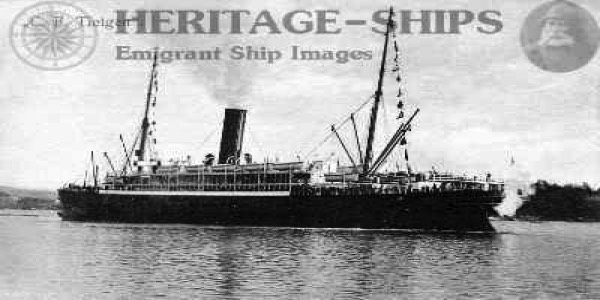
This is the story of 5 of my maternal grandfather, Georg Hansens, brothers who all chose to emigrate to the United States in the years from 1911 to 1916. They emigrated separately, but it must turn out that throughout life they have a lot to do with each other on a cross. Most of them lived in Yellow Medicine county, Minnesota, where they worked as farmers and farm workers.
ABOUT THE HANSEN BROTHERS
My grandfather, Georg Hansen, had a total of 9 siblings. Three sisters and six brothers. One brother died at age 13. This is the story of the 5 other brothers who all emigrated to America.
The five brothers are: Hans Frederik born November 4, 1886, Valdemar born August 7, 1889, Nikolaj born May 28, 1891, Hans Sejr born July 21, 1893, and Viggo born September 30, 1895.
All 5 brothers emigrated separately. One was married on departure and traveled with his wife. Two were married in America. Three of the brothers had children in America. Four were with World War I. All five died in America.
The four of the brothers, Nikolaj, Valdemar, Hans Sejr, and Viggo, emigrated to Minnesota which has been located in the part of America we today refer to as "the Wild West". The fifth, Hans Frederik chose to settle in the state of Washington which is furthest to the northwest of the United States.
One of the brothers, Nikolaj, was to become a kind of gathering point for the other brothers throughout life.
Let's start with just Nikolaj, who was the first of the brothers to travel to America ..
We are on the prairie in Minnesota - where the white man in the mid-1800s had "conquered" the prairie from the native Sioux Indians.
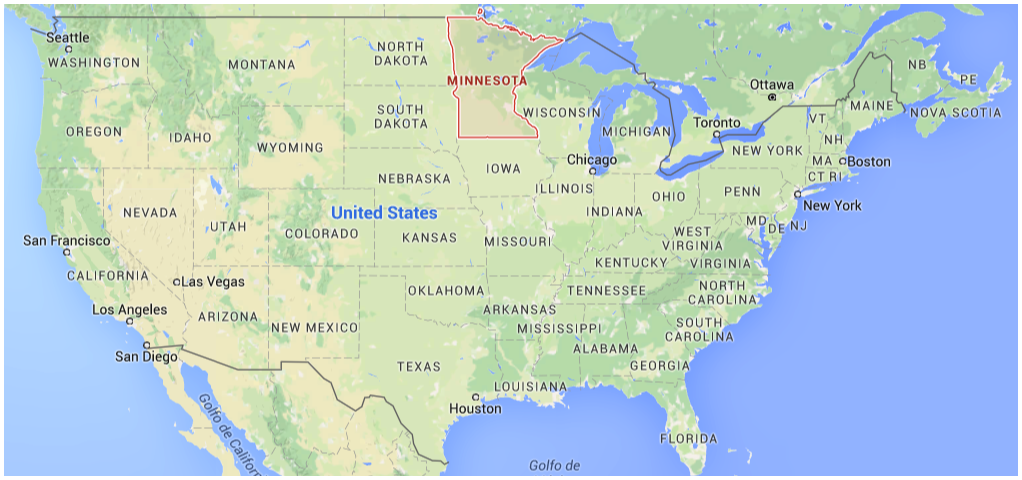
It's actually not that far west in America - but that's where the so-called "Wild West" starts.
Landhunters in Yellow Medicine 1860
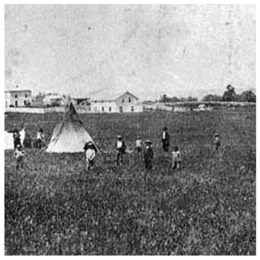
The agency was located near the site of the current village of Yellow Medicine. Part of the county was laid out for Native American Reserve. Yellow Medicine is a geographically large area of approx. 2,000 square miles. In 1880, about 5,800 people lived here. In 2010, approx. 10,500 people in Yellow County. So this is a very large, and very light populated, area.
Dakota Indians in Yellow Medicine i 1862
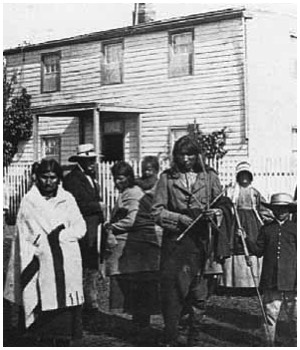
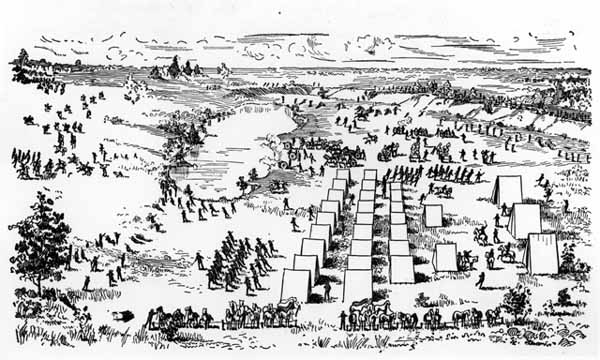
In this county, September 23, 1862, was fought the battle at Wood Lake , that shaped the future of the Indian chief Little Crows tribe, and ended the Sioux war in practice.
Battlefield at Wood Lake
His birth name was Taoyateduta. Born about 1810 in Kaposia (now South St. Paul in Minnesota).
Died July 3, 1863 in Minnesota, killed by one
newcomer who was looking for the bounty exposed on Little Crow's head.
Known as Chief of Mdewakanton Dalota known as the Sioux Indians.
He had one wife and one child.
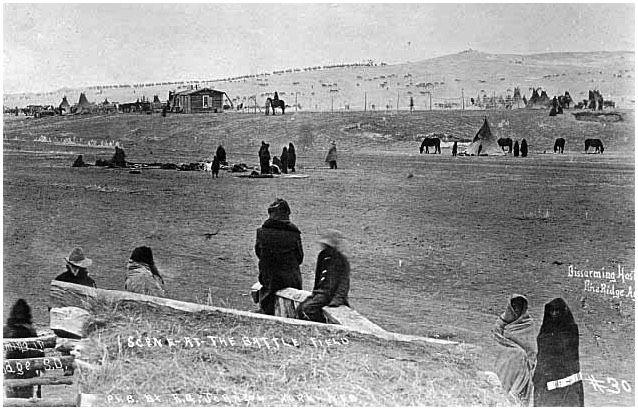
Wounded Knee after the massacre 1890
Chief Little Crow:
The cruel and final massacre of the Sioux Indians, Wounded Knee, took place near this area in 1890.
It was in this area that four out of the five brothers, Nikolaj, Hans Sejr, Valdemar, and Viggo, chose to emigrate, and this is where they lived and died.
As mentioned, the fifth brother, Hans Frederik - the oldest - chose to settle in King County Washington. More on him later.
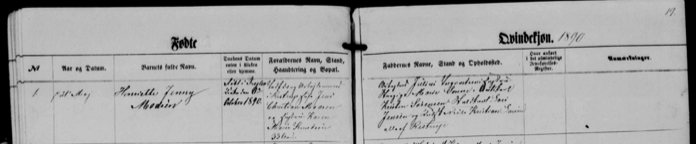
The first brother to travel was Nikolaj. Nikolaj was born May 28, 1891 in Glostrup, Egebjerg.
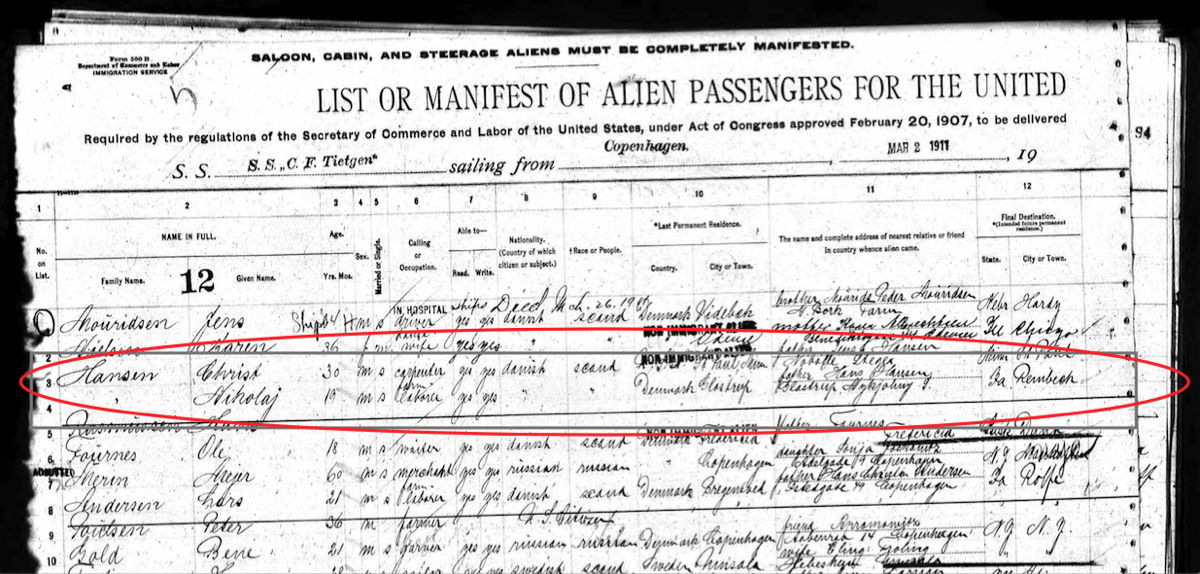
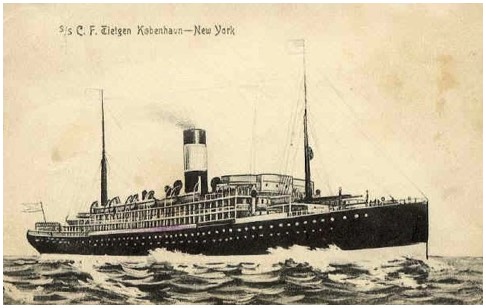
I don't think it was a particularly enviable experience to sail across the Atlantic in a ship of that size and caliber. But that's how you did it at the time - and in fact there were quite a few of the type of ships that sailed hopeful Europeans across the vast ocean to the "Land of Opportunity".
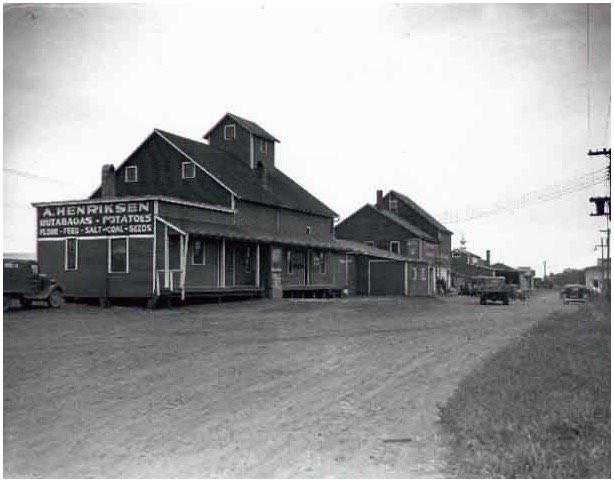
His destination is an Alfred Henriksen in St. Paul, Minnesota. It may be the same A. Henriksen, who in this 1930 picture runs a supply store in Askov, a Danish district in northern Minnesota, and not far from St. Louis. Paul.
The first thing we know about Nikolaj is that in May 1914 he was in Hudson, Iowa. Here in Iowa, Nikolaj met Henriette Jenny Madsen, a Danish girl who had emigrated in 1912, with a destination for her brother Adolf in Cedar Falls, Iowa. Cedar Falls and Hudson are located approx. 15 miles apart in central Iowa.
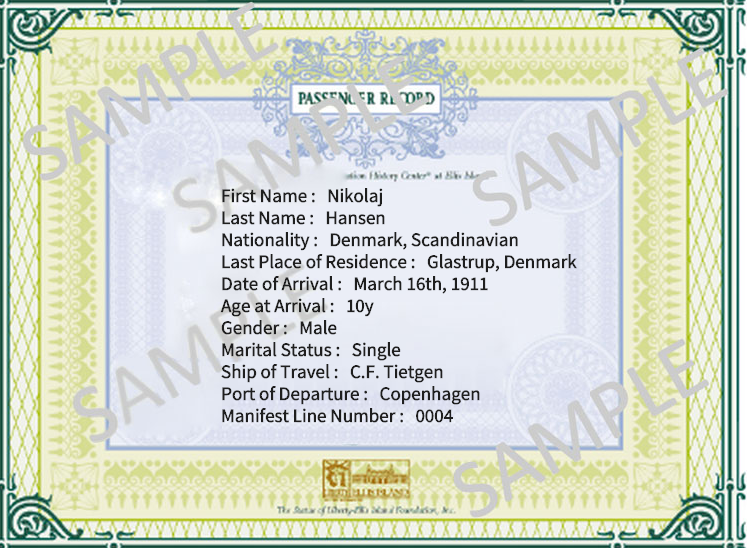
Nikolaj arrived in New York, Ellis Island on March 16, 1911. They have written Nikolai's age incorrectly after the passenger list on Ellis Island. He is 19, as shown in the passenger list, but here on Ellis Island the transcript has turned into 10 years.
A. Henriksen's supply shop in 1930
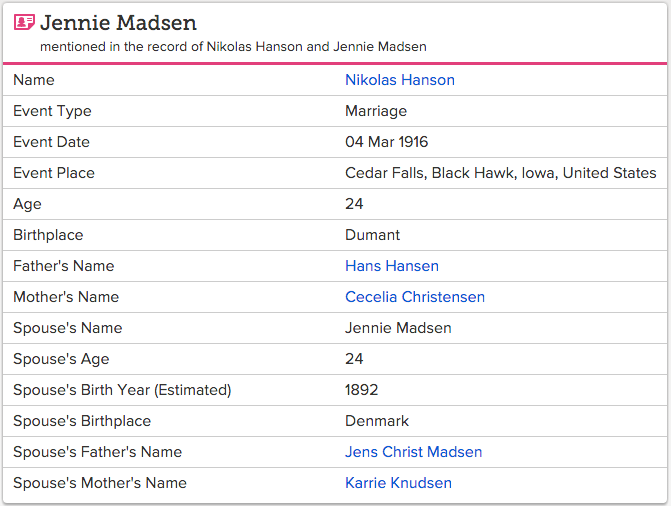
Jenny and Nikolaj were married in Cedar Falls Iowa on March 4, 1916.
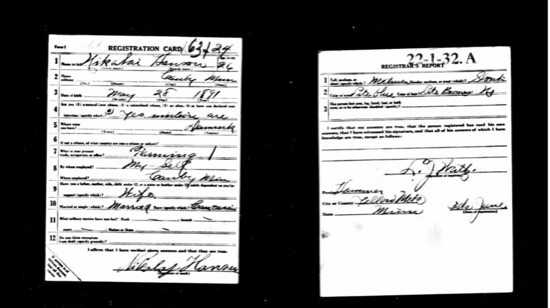
He was registered on June 5, 1917, and was probably a U.S. soldier. Army for a year thereafter.
Main Street in Canby, Yellow Medicine i 1910
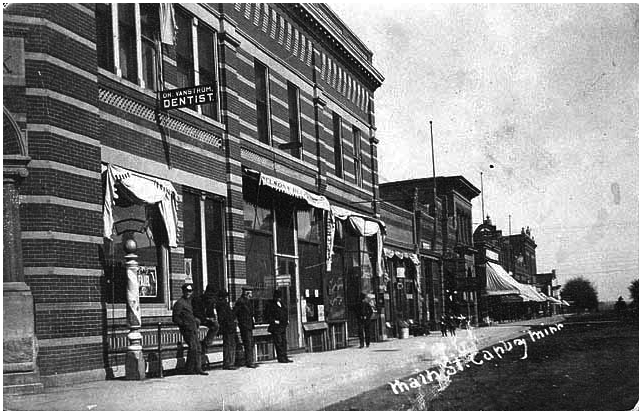
In 1920, they live in Canby
Canby was a small country town with 1,528 inhabitants in 1910. In 2010, there were 1,795 inhabitants, so there has not been a large population development here in over 100 years. The city peaked in population in 1950, with 2,173 residents registered in Canby. There was, and still is, a very small town in a very large, and very sparsely populated county
The city is named after General Edward Canby, who was a general in the U.S. Army.
Canby was founded by a new builder, John Swensson, in 1872, who secured a home here for himself and his family, right in the middle of the Sioux Native American country.
Nikolaj and Jenny still had no children in 1920, but Nikolaj was well home from the war and ready to embark on a life for Jenny, himself, and his subsequent emigrated brothers.
Nikolaj and Jenny had three children over the years 1921-1924.
In 1921, they had their daughter Helen L.
In 1922 they had son Loyd M.
In 1924, they had son Norman E.
By 1930, they had moved to the town of Hammer, an even smaller town (township) than Canby. We are still in Yellow Medicine county, Minnesota, but only about 8 miles further north. According to the 1930 Census (census), on April 4, 1930, 425 living souls lived in Hammer Township. In comparison, in the year 2000, 233 people lived in 71 families in Hammer Township, so population growth has declined somewhat over time. We are truly out in the countryside here.
Here is the 1930 Census family in Hammer Township. Nikolaj now simply calls himself Nick:

It was here in Hammer Township Nikolaj and Jenny lived their lives and created their family.
In 1940 they were still living here, and in 1931 they had another son, Myron.
Here is the family in the 1940 Census, Hammer Township:

Nikolaj and Jenny became a kind of gathering point for the family over the years. In 1920, one brother (Valdemar) lived with them. By 1930, another brother (Viggo) had settled in Canby and founded a family there, and in 1940, 4 of the 5 brothers (Nikolaj, Valdemar, Hans Sejr, and Viggo) were resident in Yellow Medicine County. It even looks like all 5 brothers were resident in Yellow Medicine County during the period from about 1933 until after1935.
Nikolaj died in Yellow Medicine County on October 17, 1967, and Jenny died in Douglas County (about 190 km further north in Minnesota) on December 26, 1976.
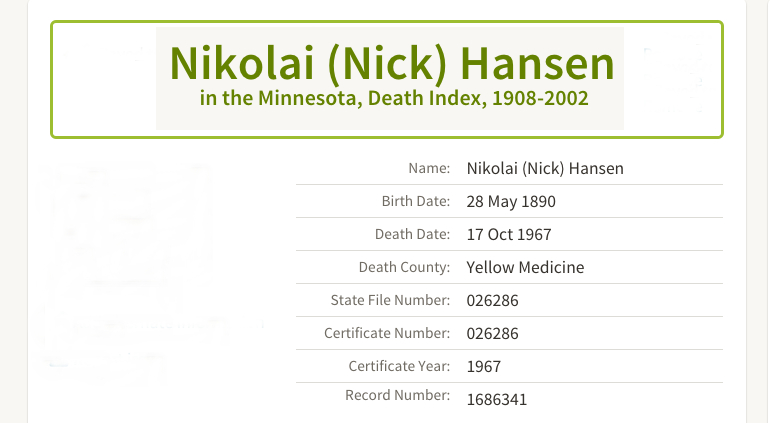
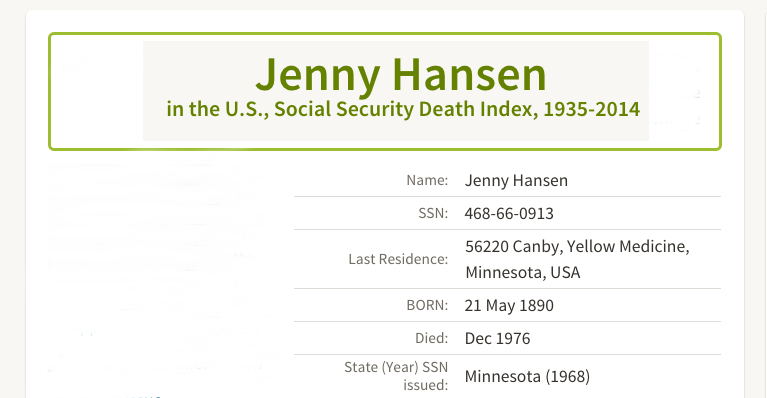
The next brother to travel was Hans Frederik, who was the oldest of the brothers. Hans Frederik was born November 4, 1886 in Grevinge, Odsherred.
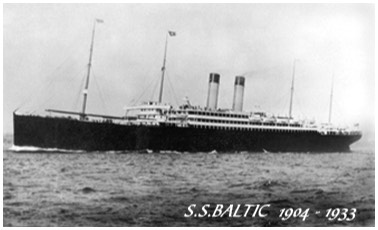


They arrived in New York, Ellis Island on October 13, 1911.
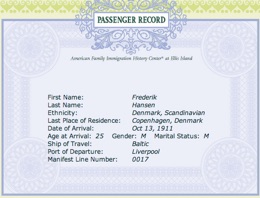
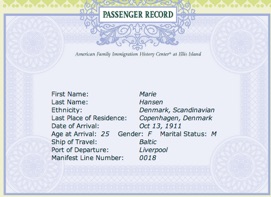
Hans Frederik and Marie had no children at this time, but that would change.
It is not known where the family settled at first, but the 1930 census shows that both of their children were born in Washington.
In 1913-1914 they had their daughter Lillian
Ca. September 1915 they got their daughter Myrtle
Hans Frederik was also summoned to World War I. It happened on June 5, 1917 (the same date as Nikolaj was called), but Hans Frederik asked for an exception on the grounds that he has been a soldier in Denmark for 6 months. He stated that his home address at this time was Dalton, Nebraska (Cheyenne county).
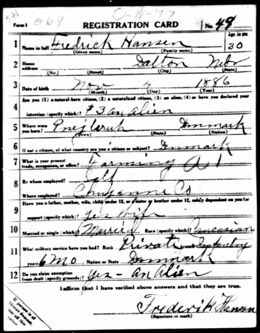
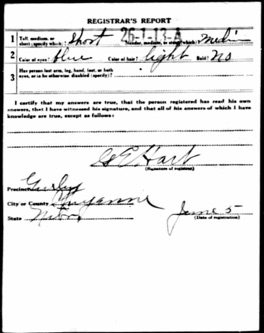
On the Regsitration Card on the left, it says that Hans Frederik was born in Prejlerup (which the registrar has obviously had his difficulties with writing). This is absolutely correct. Prejlerup is located just off Grevinge Forest, and this is where the family lived when Hans Frederik was born.
In 1920, the family lived in the state of Washington, Kings County, in Seattle City.
Thus, the census of January 1920 looks like the family, where Hans Frederik now simply calls himself Fred.

There is the funny little detail about this census that Myrtle is stated to be 4 4/12 years old. Since the census was completed in January 1920, this means that we know that Myrtle in January 1920 is 4 years and 4 months old. So we can figure out that she was born approx. September 1915.
On April 8, 1930, the family was still living in Seattle, Washington. Apparently, they had no more children and Hans Frederik nourished himself as a caregiver in an orphanage.

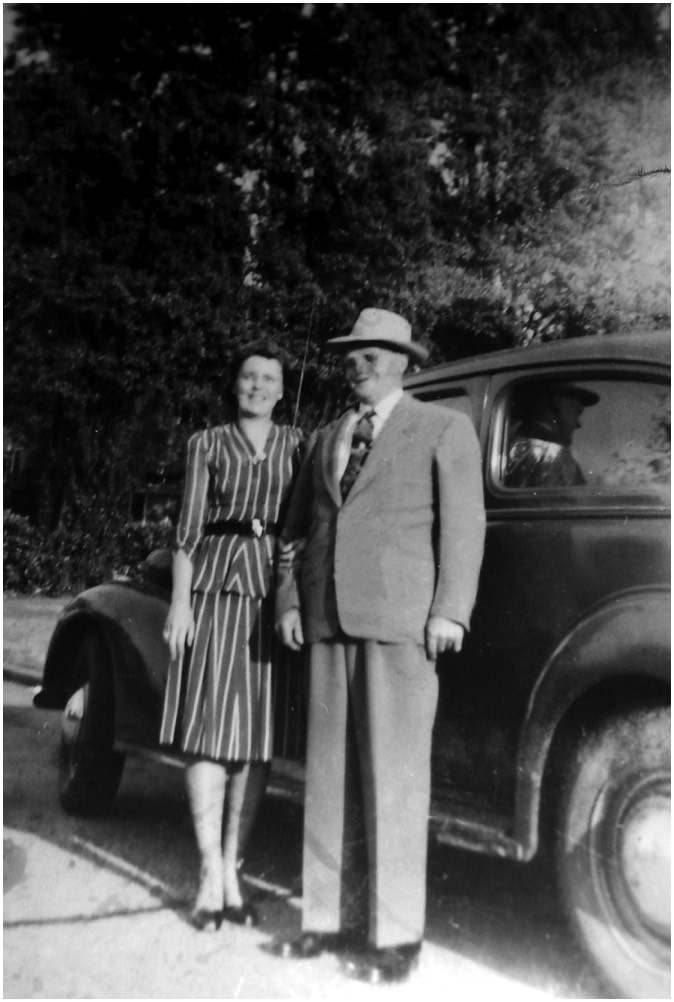
Here Hans Frederik and Marie probably circa 1940
(photo is from Inge Sabry who is the grandson of Marie's brother)
I believe that the family moved to Canby, Yellow County, Minnesota, where the other brothers stayed for a relatively short time.
I have p.t. no records of what happened to their two daughters.
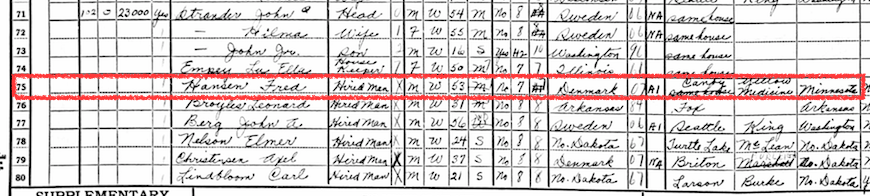
But Hans Frederik was back in Washington in 1940, where he was "Hired Man" with the John Strander family in Seattle. The Seattle Census of 1940 also shows that Hans Frederik stayed in Canby, Yellow Medicine in 1935.
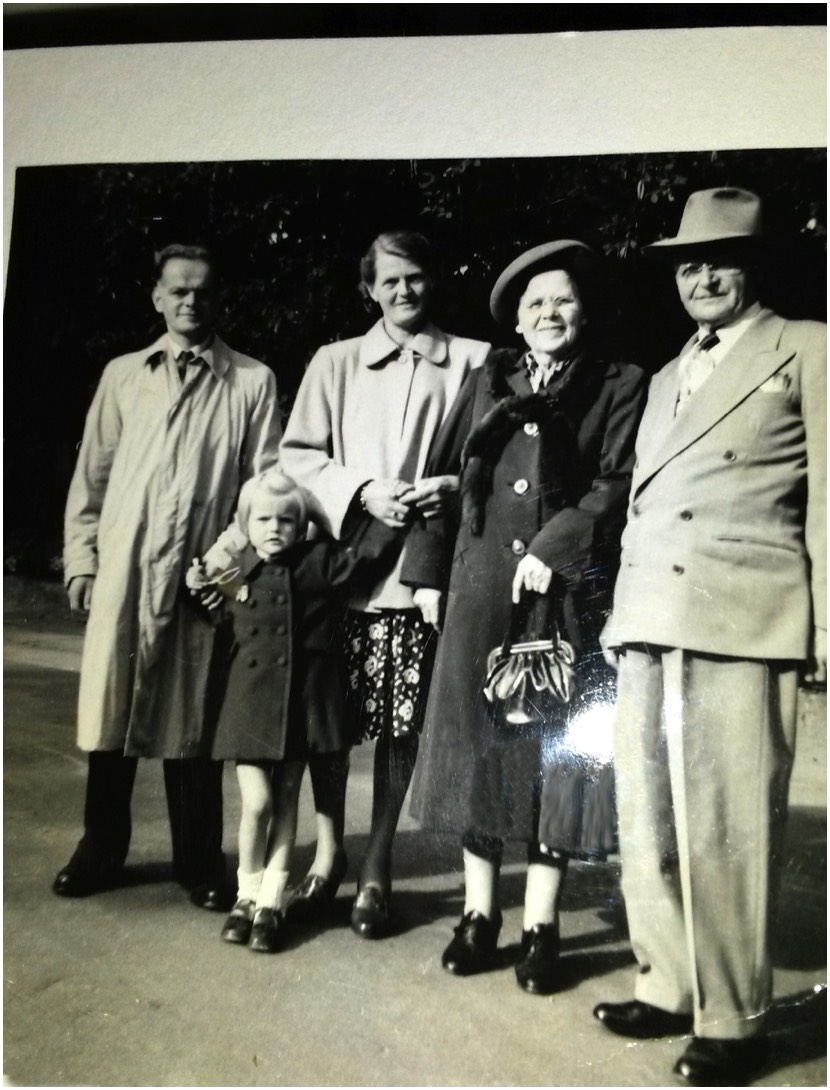
Here Frederik and Marie visit Hellerup in 1952. The little girl is Inge Sabry.
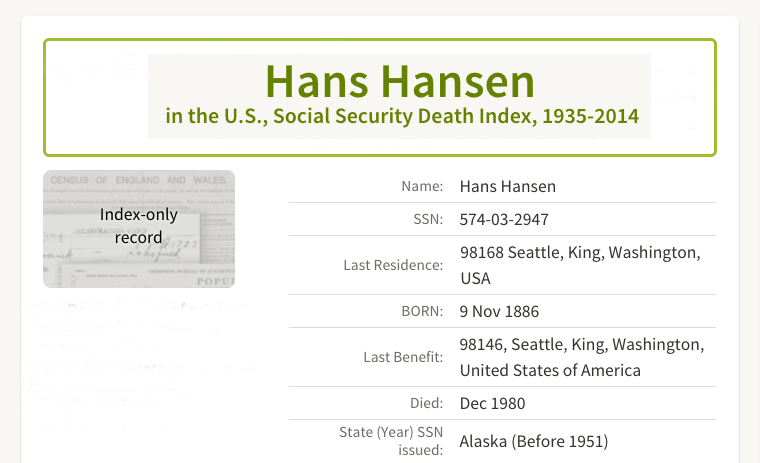
They both grew very old. Hans Frederik became approx. 94 years. He died in 1980 in Seattle, but had apparently resided in Alaska for a period before 1951.
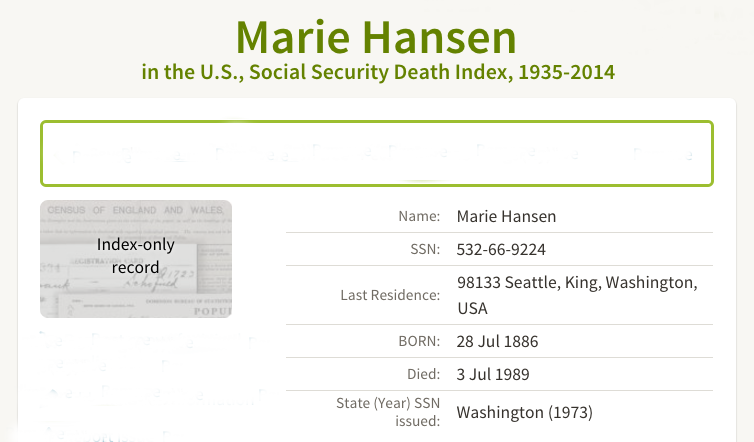
Marie just turned 103, and died July 3, 1989, as shown in the 1989 Social Security Death Index Card from Seattle, King, Washington in 1989.
The third brother who traveled was Valdemar, who was the second oldest of the brothers. Valdemar was born August 7, 1889 in Egebjerg, Odsherred.
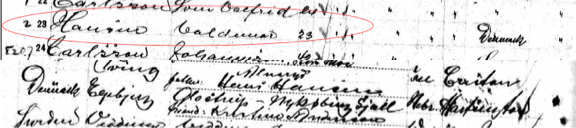
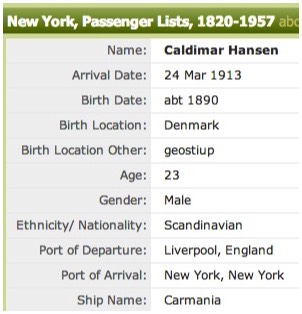
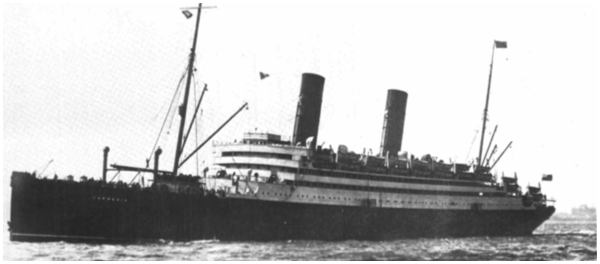
Valdemar arrived as noted above for New York Ellis Island on March 24, 1913.
It turns out that Valdemar was one of two brothers who did not get married and started their own family in America, but who along the way lived with several of his brothers.
In 1920, Valdemar, who came to be called Walther, lived with his brother Nokolaj (Nick) and his wife Jenny, in Canby, Yellow Medicine.


Valdemar lived in Rural, Yellow Medicine in 1935.
In 1940, Valdemar was “hired hand” at Otto Dane in the town of Oshkosh, about 8 km from Canby.
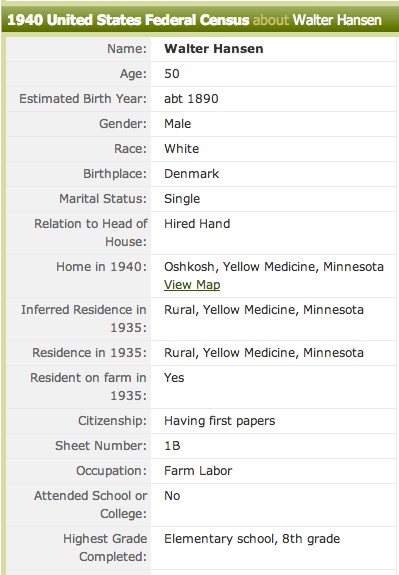
In 1940, Valdemar was on his way to becoming a US Citizen, just as his other brothers in the Canby, Minnesota area had become. It is not known if he ever managed to become that.
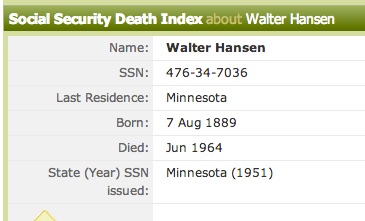
Valdemar died on June 7, 1964 in Minnesota.
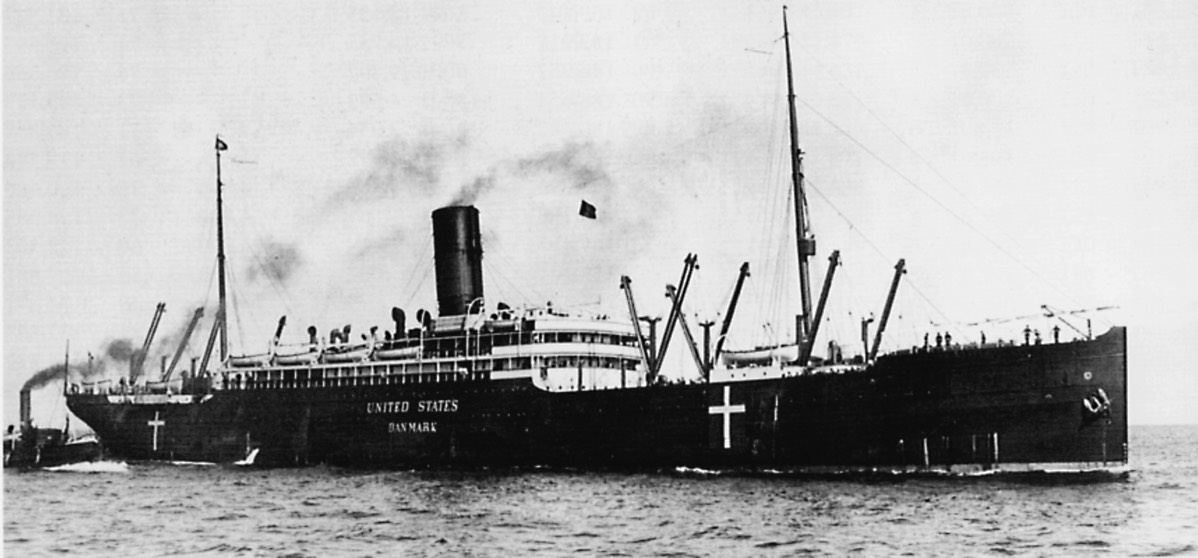
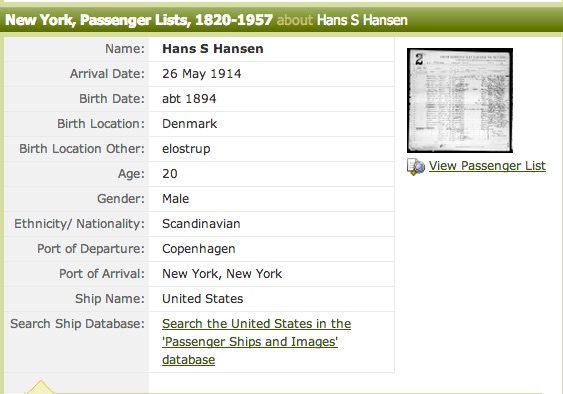
Hans Sejr set out from Copenhagen on May 14, 1914 on the good ship SS United States and arrived in New York on May 26, 1914, as seen by the passenger list here.

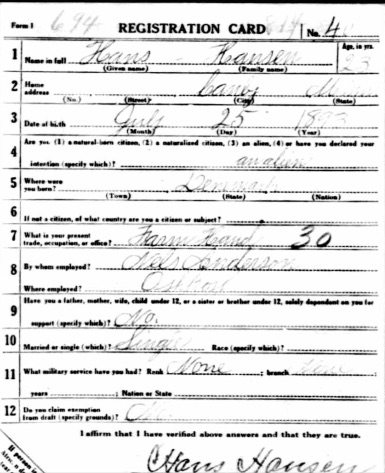
Hans Sejr joined World War I for a couple of years, after which he returned to Yellow Medicine, and his brothers who had also joined the war.

Emy Winthers was born in Iowa, Wisconsin, Minnesota, so she is a "real" American.
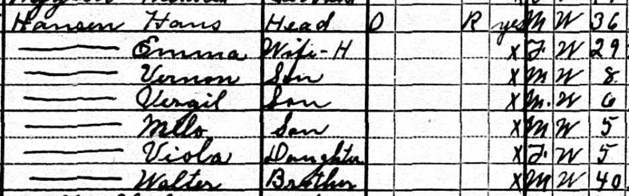
Valdemar (who in American became Walther) lives and works with Hans Sejr and Emma in 1930.
It seems that there has been a strong relationship between these brothers throughout the period they have lived and worked in America. They were always geographically close to each other at all times, and Valdemar shared his "favor" and lived with several of them for periods along the way.
In 1940, the family lived in Marshfield Township, Lincoln, Minnesota, 59 km from Hammer, and 83 km from Rural where Walther lived at this time.
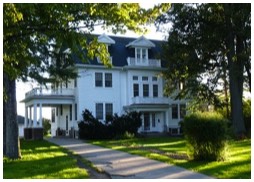
During the period up to 1890, German emigrants made up to 2/3 of the population.
In 2000, 18,800 people lived in 8,235 households, and in 2010, 19,118 people lived in 8,777 households.
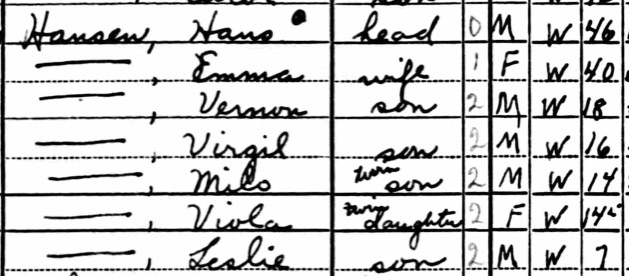
Emma and Hans Victory had another son, Leslie, in 1940 and all the children were still living at home.
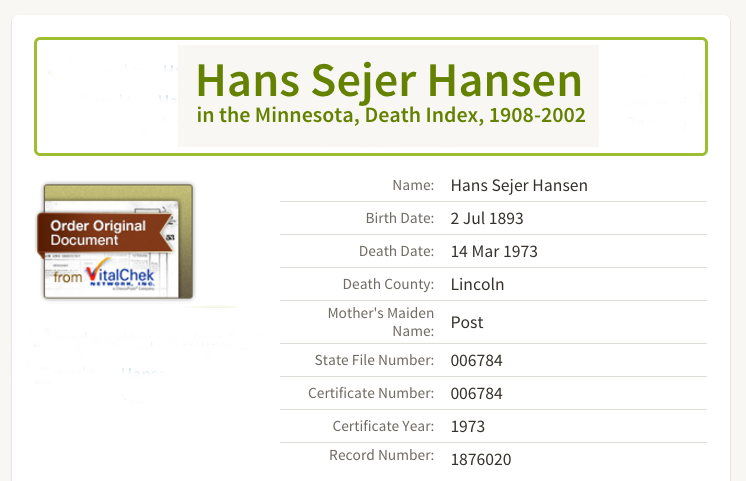
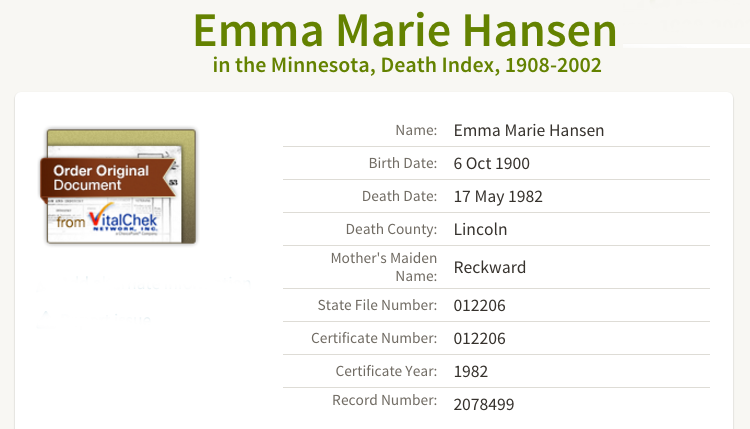
The last brother who emigrated was Viggo
Viggo was born on September 30, 1895 in Egebjerg, Odsherred.
On March 30, 1916 (right in the middle of World War I), he set out from Copenhagen with the good ship Frederik VIII, which was the last of the transatlantic steamers on the Scandinavia - America line where the ship sailed from 1914 to 1935.
Viggo arrived in New York, Ellis Island on April 13, 1916.
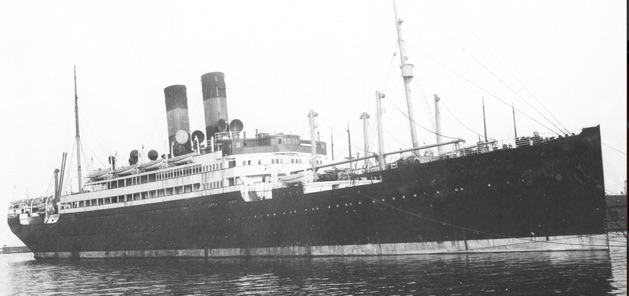

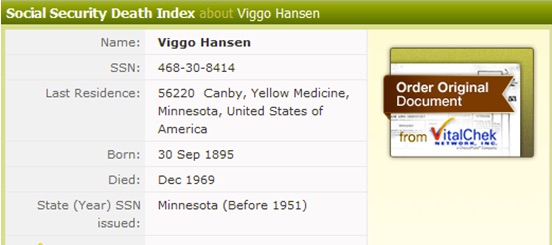
Viggo lived for most of his life near Canby, Minnesota, close to the other brothers and their families. Apparently, Viggo never got married. In return, he succeeded both in becoming a U.S. soldier in World War 1 in 1917, and in becoming a U.S. citizen in 1919.
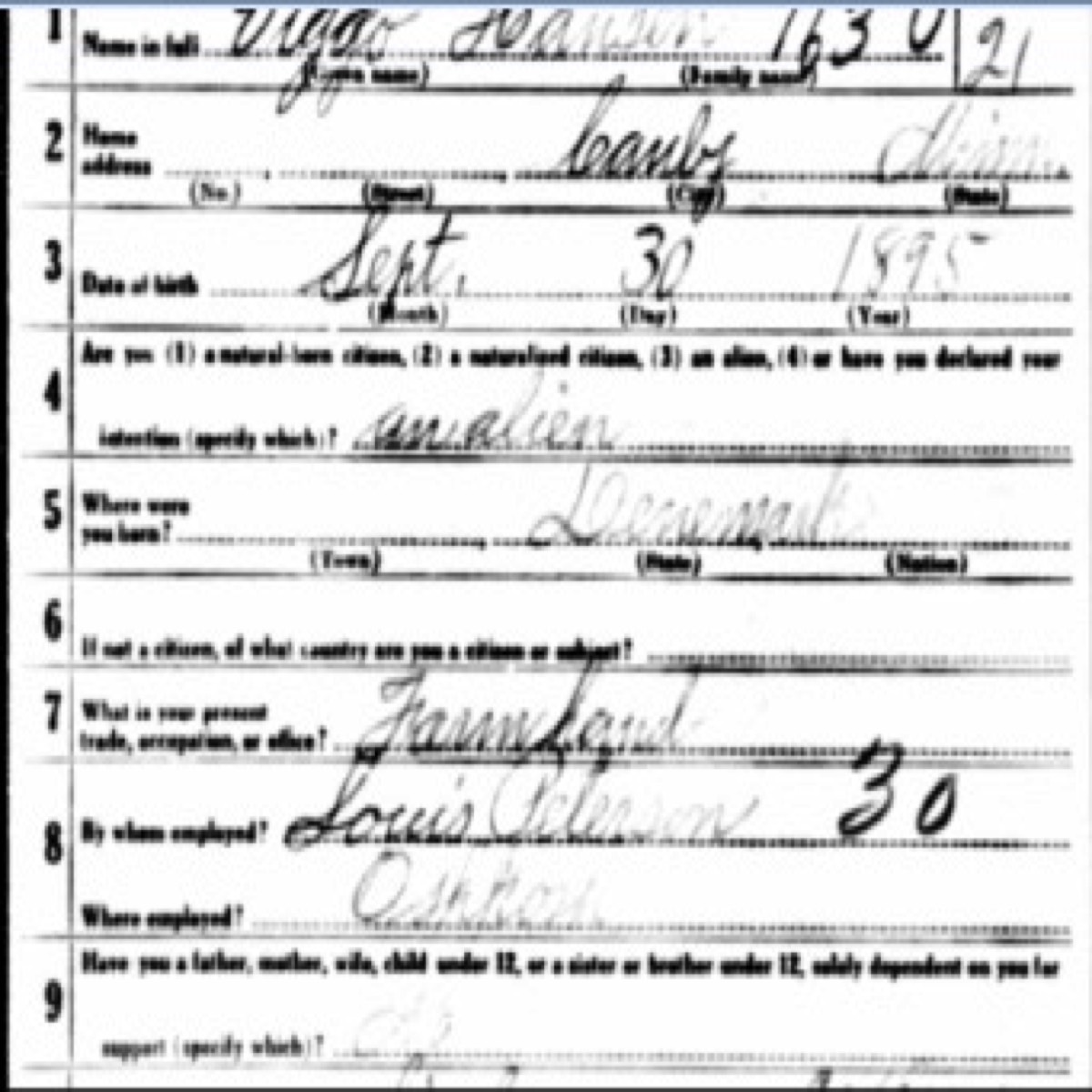

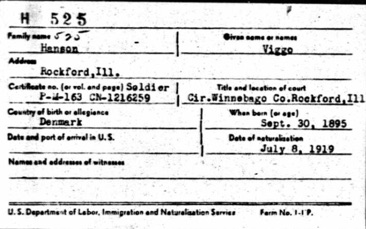
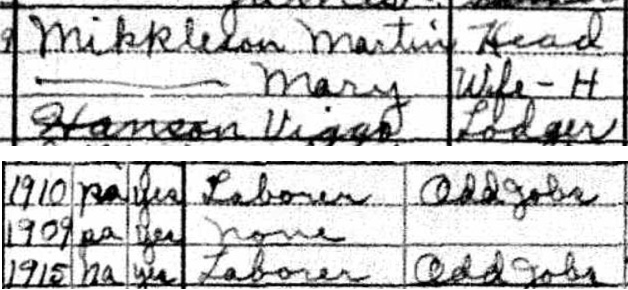
In 1930 Viggo lived with Martin Mikkelsen and his wife Mary in Canby. Both Viggo and Martin Mikkelsen were workers with “Odd jobs” (various jobs) as evidenced by this cut from the 1920 census in Canby, Yellow Medicine, Minnesota.
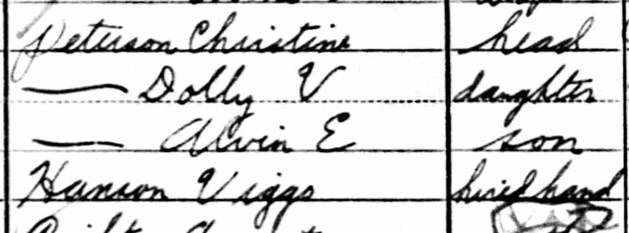
These were the stories of the 5 emigrated brothers, all of whom came from a very small and very sparsely populated community in Odsherred, Zealand, who each emigrated to America independently. I have no doubt that there was great courage to do what they did - not least from Nikolaj, who was the one who traveled first.
His courage and what he gained quickly in America have certainly helped the other four brothers make the big leap, and have traveled across the Atlantic to "The Land of Opportunity"
Separately, these 5 pioneers have been "settlers" and thus helped to create the America we all know today.
Still, the family ties have been very strong, and the brothers have a strong bond in a very large but still very sparsely populated area of Minnesota, U.S.A.
Writing these stories has been exciting. I hope that reading them has also been exciting.
Peter Kroman ©